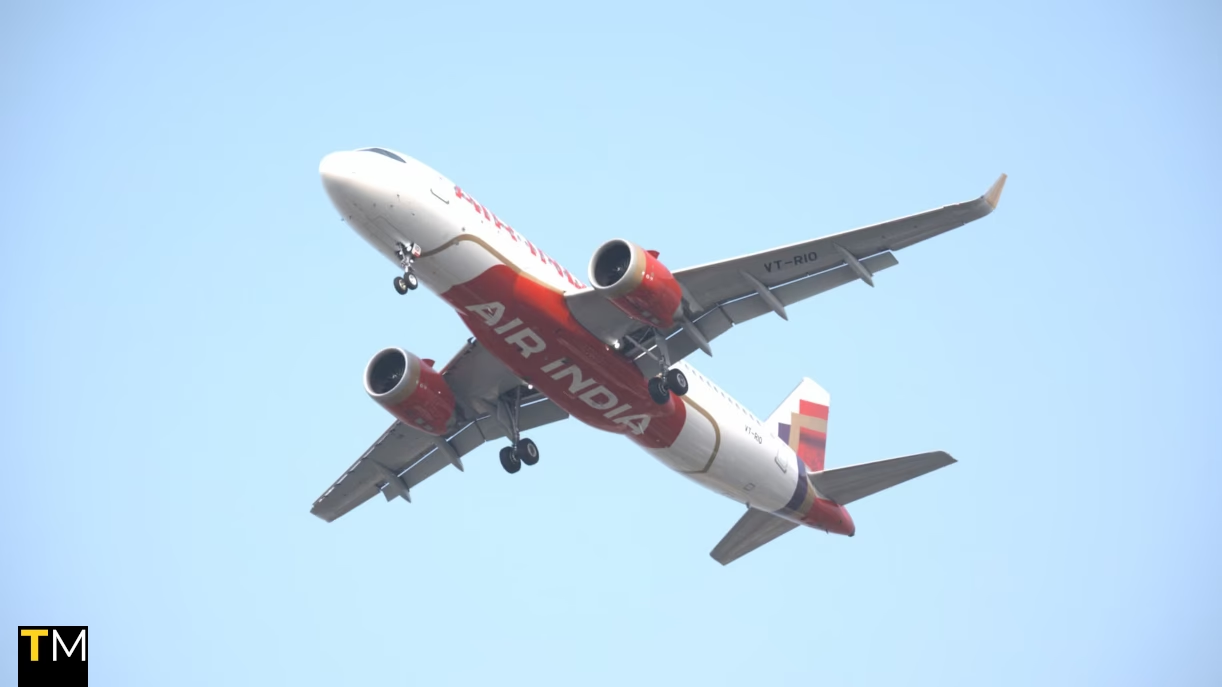
When pilots go around: One of aviation’s most standard safety decisions
The runway is in sight and the aircraft is moments from touchdown. Then the engines surge, the nose lifts and the aircraft begins to climb again. Here is why this is often one of the safest decisions a pilot can make.
What is a Go-Around?
- A go-around is when pilots discontinue a landing attempt and climb away to try again.
- It’s a routine safety manoeuvre, not an emergency.
- Reasons include: runway occupancy, weather changes, traffic, or unstable approach.
Why It Matters
- Pilots are trained to go around early and decisively if conditions aren’t right.
- Regulators like the FAA and India’s DGCA encourage go-arounds to prevent unstable approaches, which can lead to runway excursions.
- It’s a sign of good airmanship, not failure.
How Common?
- Occurs in about 1–3 approaches per 1,000.
- Over 99% of approaches end with a landing on the first attempt.
- Frequent travellers may experience one occasionally, but many passengers never do.
Air India’s Approach
- Air India pilots train for go-arounds in simulators during initial and recurrent checks (every six months).
- Each check includes 2–3 go-arounds to reinforce decision-making.
- Safety culture encourages pilots to prioritise safety over completing a landing.
Key Takeaway
A go-around is one of aviation’s most important safety defences. It shows that pilots are protecting safety margins, not that something went wrong. As Air India’s Chief Pilots explain, it’s a normal, well-practised decision that ensures every landing is safe.