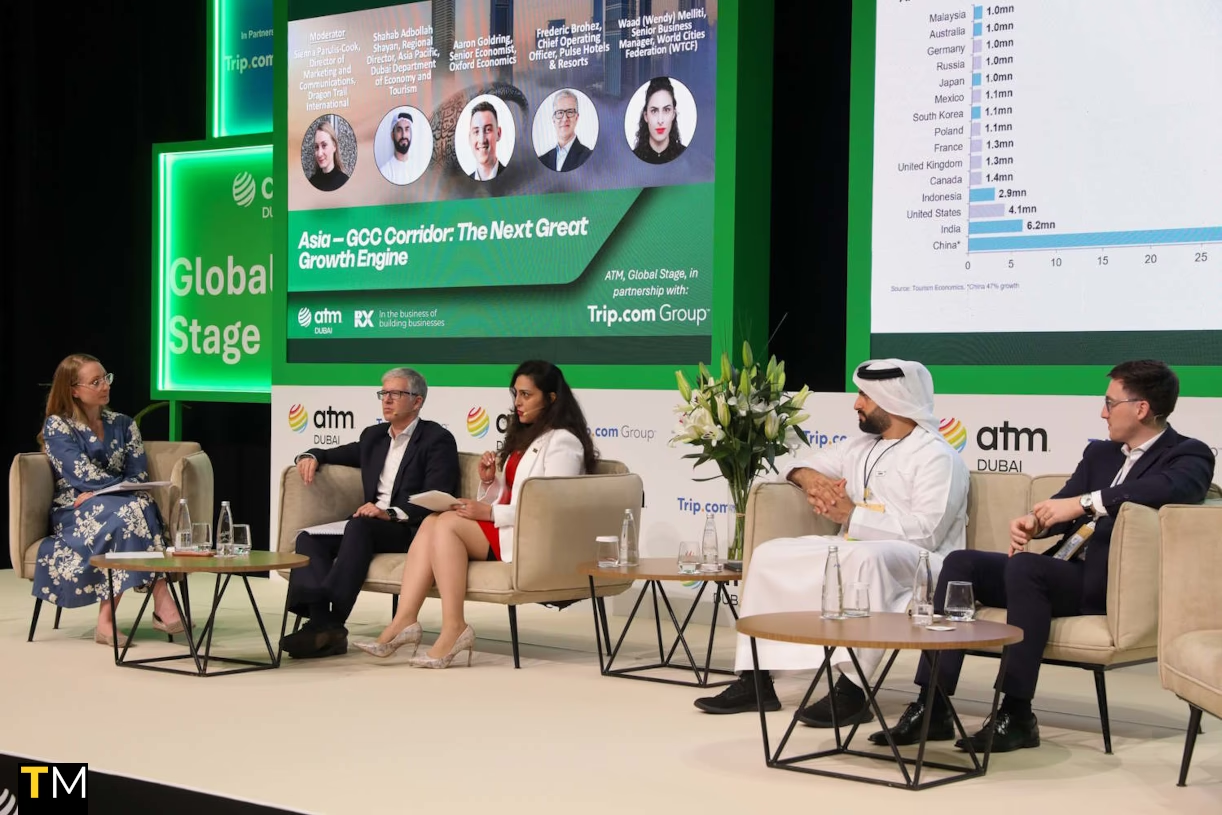
Industry experts speaking at ATM 2026 say accessible, seamless, visa-free travel could make Asia-GCC corridor next great growth engine
Measures to ensure
accessible, seamless, visa-free experiences could turn the Asia-GCC corridor into
the next great growth engine for the Middle East’s travel sector, according to industry
leaders speaking at Arabian Travel Market (ATM) 2026. The 33rd edition of ATM
concludes today at Dubai World Trade Centre.
Travel Growth Context
- In 2025, the GCC welcomed 165 million overnight guests from Asia-Pacific, a 160% increase in six years despite the pandemic.
- India remains the largest source market, while arrivals from China grew 10% over the same period.
Visa-Free & Seamless Travel
- Dubai’s reforms: Visa-free entry for Chinese travelers since 2016, plus integration of Alipay and WeChat Pay to make travel frictionless.
- China’s reforms: By 2018, GCC travelers enjoyed visa-free access to China. In 2025, arrivals from GCC countries doubled year-on-year, with Saudi Arabia up 110% and UAE up 113%.
Hospitality & Consumer Trends
- Travelers increasingly seek experiential holidays—cultural immersion, nature, and unique stays.
- Operators like Pulse Hotels & Resorts are tailoring products and channels to meet these evolving expectations.
Industry Perspective
- Danielle Curtis (RX Global) emphasized that accessible, visa-free travel is becoming a major growth engine, with both public and private sectors enabling this corridor.
- The Asia–GCC link is seen as a strategic driver for tourism expansion, aligning with ATM’s theme: Travel 2040 – Driving New Frontiers Through Innovation and Technology.
🔑 Takeaway: The Asia–GCC corridor is being positioned as the next powerhouse for Middle East tourism, built on visa-free policies, seamless payment systems, and a focus on experiential travel.