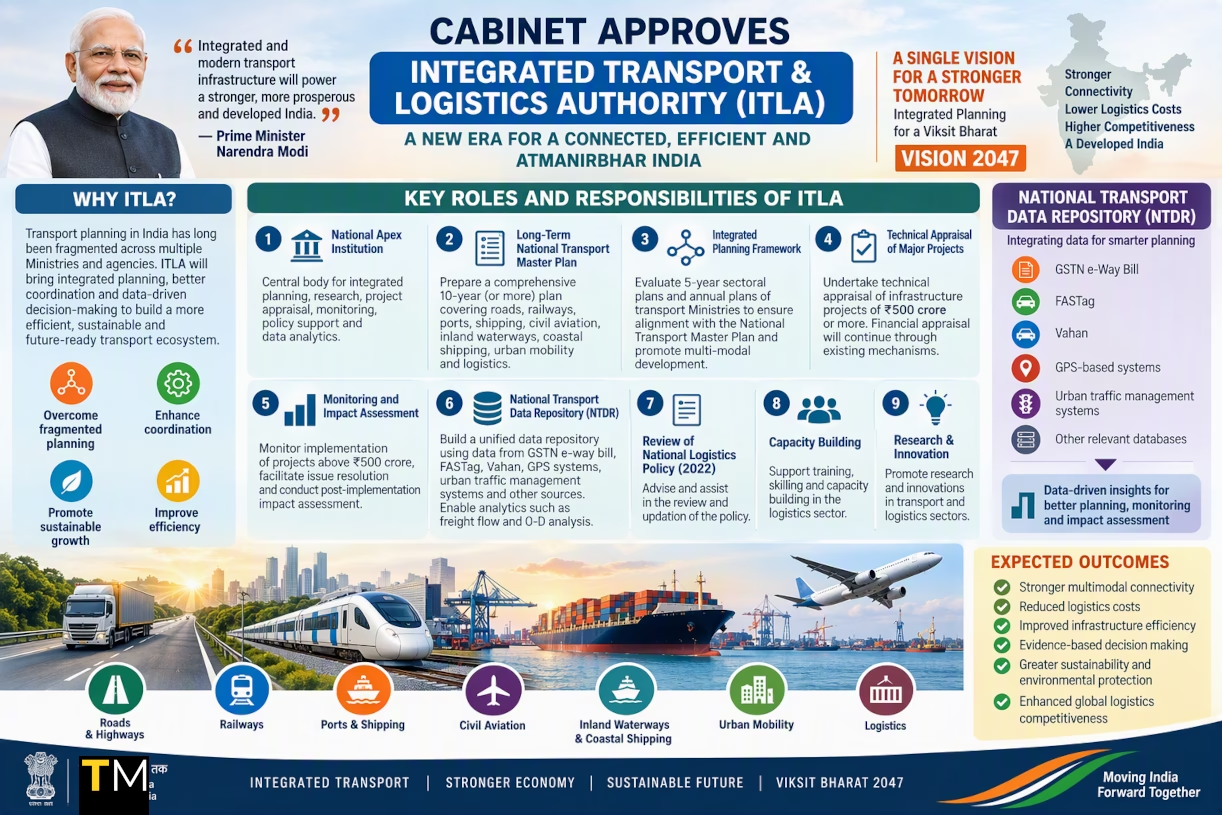
Cabinet approves setting up of Integrated Transport and Logistics Authority
The Union Cabinet, chaired by Prime Minister Narendra Modi, has approved the creation of the Integrated Transport & Logistics Authority (ITLA) as a Special Purpose Vehicle (SPV) to strengthen planning, research, appraisal, monitoring, and data-driven decision-making across India's transport and logistics sectors.
Why ITLA Has Been Created
India's transport ecosystem is spread across multiple ministries and agencies handling:
- Roads and highways
- Railways
- Ports and shipping
- Civil aviation
- Inland waterways
- Urban mobility
- Logistics
The government aims to overcome fragmentation in planning and implementation by creating a single institution focused on integrated, multimodal transport planning.
Key Functions of ITLA
1. National Apex Institution
ITLA will serve as the country's central body for:
- Transport research
- Integrated planning
- Policy support
- Project appraisal
- Data analytics
- Monitoring and evaluation
2. National Transport Master Plan
ITLA will prepare a long-term National Transport Master Plan with a planning horizon of ten years or more, covering all major transport modes.
3. Coordinated Planning
The authority will review:
- Sectoral plans of transport ministries
- Annual infrastructure plans
- to ensure alignment with the National Transport Master Plan and promote multimodal connectivity.
4. Technical Appraisal of Major Projects
- ITLA will conduct technical appraisal of Central Government transport and infrastructure projects worth ₹500 crore or more.
- Financial assessments will continue through existing appraisal mechanisms.
5. Monitoring and Impact Assessment
Projects valued above ₹500 crore will be monitored by ITLA to:
- Track implementation progress
- Resolve coordination issues
- Assess post-completion impacts and outcomes
National Transport Data Repository (NTDR)
One of ITLA's most significant responsibilities will be establishing a National Transport Data Repository (NTDR).
The platform will integrate data from:
- GSTN e-Way Bills
- FASTag systems
- Vahan database
- GPS-based transport systems
- Urban traffic management systems
- Other logistics and transport databases
This will enable:
- Freight flow analysis
- Origin-destination analytics
- Infrastructure planning
- Real-time monitoring
- Evidence-based policymaking
Additional Responsibilities
ITLA will also:
- Support review and updating of the National Logistics Policy (2022)
- Promote logistics-sector skilling and capacity building
- Encourage innovation and research
- Facilitate adoption of global best practices
Expected Benefits
The government expects ITLA to help:
- Improve multimodal connectivity
- Reduce logistics costs
- Enhance infrastructure efficiency
- Strengthen project monitoring
- Improve coordination across transport sectors
- Increase India's global logistics competitiveness
Strategic Significance
The creation of ITLA represents a shift from silo-based transport planning toward an integrated national approach. By combining long-term planning, big-data analytics, project evaluation, and multimodal coordination under one institutional framework, the authority is intended to support India's Vision 2047 objective of building a more efficient, connected, and globally competitive transport and logistics network.
ITLA will become India's central transport-planning and logistics intelligence body, overseeing integrated infrastructure planning, major project appraisal, data analytics, and multimodal development to improve efficiency and reduce logistics costs nationwide.